ESG Reporting Software: Convenience in Sustainable KPI Tracking
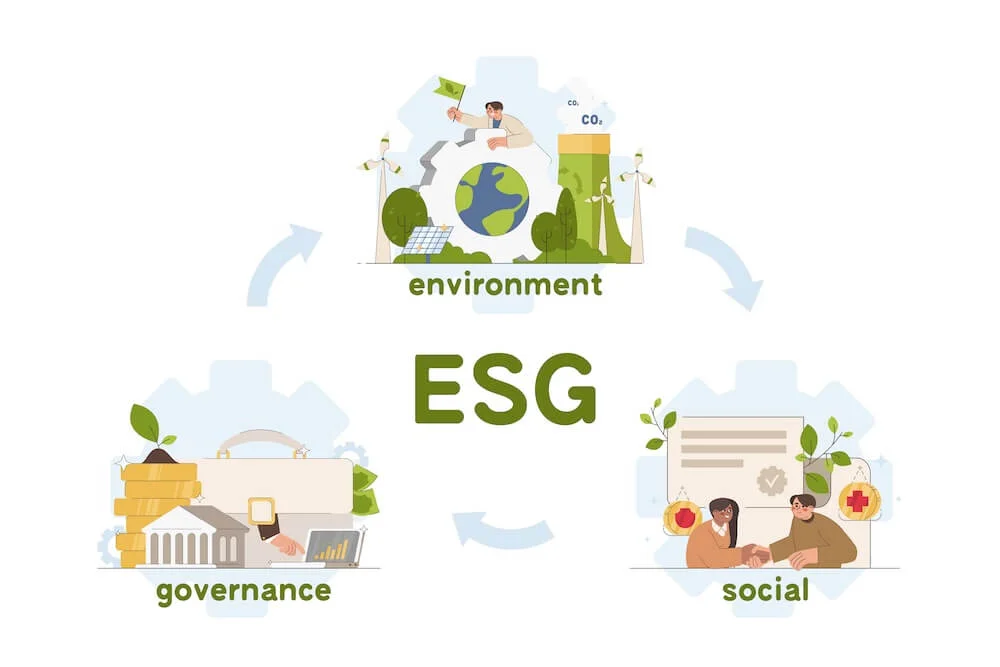
In today’s competitive business landscape, environmental, social, and governance (ESG) considerations have become increasingly core to corporate strategy.
By systematically tracking and reporting ESG metrics, companies can not only augment transparency and accountability but also identify areas for positive change across their operations. Thereby, demonstrating their commitment to sustainability and responsible business practices.
Relatedly, sustainable KPIs are a quantifiable way for companies to measure and monitor their progress towards their ESG goals. By aligning their KPIs with global frameworks and standards, like the United Nations Sustainable Development Goals (SDGs), enterprises can demonstrate their commitment to sustainability.
Embracing sustainable KPI tracking can help companies can strengthen their long-term viability and build trust with stakeholders. And as a result, position themselves as responsible and forward-thinking entities in the global marketplace.
What is ESG reporting?
ESG reporting is the methodical disclosure of environmental, social, and corporate governance data by companies to provide transparency about their sustainable activities.
In practice, it seeks to shed light on a business entity’s ESG initiatives and enhance investor transparency— all whilst inspiring other enterprises to adopt more positive environmental and social practices.
Why is ESG reporting important for companies?
ESG reporting is a strategic imperative for forward-thinking companies for several reasons. Firstly, it allows companies to disclose their performance via a framework that showcases their commitment to sustainability and responsible business practices.
This practice, in turn, enables companies to proactively manage their sustainability impacts whilst enhancing their reputation and brand value.
Secondly, it helps companies identify and mitigate ESG risks that could impact their long-term viability. In fact, by aligning their strategies with ESG goals, companies can easily access green financing, and reduce their exposure to regulatory risks.
By the same token, companies with strong ESG profiles typically benefit from better loan terms and increased investment opportunities.
Furthermore, with advanced analytics and visualisation capabilities, it can help companies access predictive insights, anticipate future challenges, and proactively address sustainability issues.
*Read: *Bursa ESG Reporting Solution: A Step-by-Step Guide for PLCs
The need for ESG reporting software
Driven by regulatory requirements, investor expectations, and consumer preferences, modern companies are facing increasing pressure to provide transparent and reliable ESG data.
Suffice it to say, ESG reporting is no longer just a voluntary exercise, but a critical component of corporate disclosure.
This is exemplified by initiatives like the EU’s Corporate Sustainability Reporting Directive and Bursa Malaysia implementing mandatory ESG reporting requirements for public-listed companies (PLCs)
Currently, Bursa Malaysia’s ESG reporting requirements encompass disclosing Common Sustainability Matters (regardless of sector) related to:
- Diversity
- Anti-corruption
- Data privacy and security
- Community
- Energy management
- Health and Safety
- Labour practices
- Supply chain management.
Additionally, listed issuers are mandated to disclose quantitative information for each material sustainability matter—covering three financial years’ data, performance targets, and a summary of the data and targets in a prescribed format.
It’s fair to say that all these requirements can be convoluted and overwhelming to navigate in a timely and accurate manner, without the appropriate tooling. Fortunately, ESG reporting software can help in programmatically gathering and analysing all the related data. Thereby, assisting companies to track, manage, and report on their sustainability efforts effectively.
Challenges that companies face in ESG reporting
Many business entities currently rely on manual reporting mechanisms that are orchestrated by heterogeneous systems, spreadsheets, and ad-hoc methods. These mechanisms are typically siloed and spread across disparate departments, which makes it exceedingly challenging to centralise and standardise the data.
In turn, this manual, fragmented approach to data collection is prone to errors, omissions, and version control issues. Thus, undermining the accuracy and integrity of the reported information.
To aggravate issues, manually reviewing, copying, and pasting data from disparate sources is time-consuming and resource-intensive—diverting valuable time and effort away from strategic sustainability initiatives.
Bursa Malaysia offers a reporting platform specifically for the submission of ESG-related data. However, this process can be complex, requiring manual coordination and data submission by companies.
How can AI-powered ESG reporting software help you?
Bursa Malaysia’s ESG reporting platform is pivotal in orchestrating the submission of relevant data—ensuring listed companies comply with mandatory reporting regulations.
However, collecting, consolidating, and verifying data can be extremely challenging. It often requires companies to rethink their data management strategies to establish robust controls to ensure the reliability of their ESG reporting.
ESG reporting solutions like Mandrill significantly simplify this task.
In fact, data collection, consolidation, and tracking are especially sophisticated and time-consuming for companies without the support of third-party ESG software providers like Lestar.
It offers advanced solutions that streamline the ESG-data submission process to Bursa’s platform. It assists businesses by collecting, consolidating, and tracking internal data, thereby streamlining the submission process to Bursa Malaysia’s system. This integration facilitates a more efficient and less labor-intensive approach to ESG reporting
So, by leveraging an AI-powered ESG software, companies can augment the efficiency and accuracy of their reporting. It, thereby, reduces the burden of manual coordination and submission to Bursa’s platform.
This not only saves time but also dramatically minimises the risk of errors. Thereby, ensuring that companies can meet regulatory requirements and communicate their sustainability efforts effectively.
AI-powered ESG reporting software also typically offers predictive analytics and forecasting capabilities. This enables progressive companies to anticipate their future ESG performance and strategically plan for sustainable initiatives.
Lastly, AI software can customise reporting to meet the specific complex requirements of diverse stakeholders, jurisdictions, and interest groups. This ability to address the unique concerns of different audiences enhances transparency, engagement, and accountability. Thus it helps in building trust with stakeholders who prioritise ethical and sustainable business practices.
Features of Lestar that enhance ESG reporting
Without a technology-enabled approach to ESG reporting, Malaysian companies risk falling behind in their ability to meet evolving regulatory requirements and investor expectations.
Lestar, as a third-party solution, programmatically streamlines the process of ESG data submission for Malaysian companies. By exploiting advanced AI mechanisms, Lestar integrates seamlessly with businesses’ existing systems, simplifying the handling and reporting of data.
Orchestrated by its AI-driven centralised data repository, this integration capability ensures that companies can efficiently collect, manage, and report their data in a structured and automated manner. Thus reducing manual effort and minimising the risk of errors in the reporting process.
Moreover, its AI-driven analytics and interactive dashboard enable companies to intuitively track, analyse, and report on ESG metrics more accurately and efficiently. Thereby, transforming how Malaysian enterprises approach their sustainability commitments.
The key features of Lestar software that make it scalably suited to navigate the complexities of ESG reporting are:
- Automated data collection: It constitutes features to automatically gather ESG data from various sources. Thus, eliminating the need for manual data entry and considerably reducing the risk of errors associated with traditional manual processes.
- AI-driven centralized data repository: It provides a single, centralised platform to store, manage, and access data. This AI-driven data repository enhances data integrity, facilitates data sharing, and simplifies the reporting process. This ensures that all stakeholders have access to consistent and up-to-date information.
- Big data analysis dashboard: The software includes a dashboard that leverages big data analysis capabilities to help companies visualise large volumes of data efficiently. This feature allows non-technical users to gain valuable insights from complex datasets, enhancing decision-making.
- Generative AI chatbot: It comprises a generative AI chatbot capability that offers interactive support and guidance to users. These chatbots can also assist with data queries, provide real-time feedback, and offer suggestions for enhancing ESG reporting practices.
- Real-time tracking of KPIs: The software enables companies to track their ESG performance in real time. It allows them to monitor progress and make data-driven decisions to enhance their sustainability efforts.
- Artificial intelligence integration: Lestar features custom AI-powered algorithms that can automate tasks, identify patterns, and generate insights that would be difficult or time-consuming to achieve manually.
- Forecasting and prediction overview: The software features AI-powered predictive analytics to forecast a company’s future ESG performance based on historical data. This feature enables companies to anticipate potential risks and opportunities. Thus, enabling them to proactively plan and implement sustainability strategies.
Conclusion
There is undeniably an increasing demand for accurate and timely ESG reporting, driven by the shifting business landscape. Investors, regulators, and stakeholders are placing greater emphasis on sustainability transparency and accountability from Malaysian companies across disparate industries.
Part of this is driven by international concerns regarding social justice, climate change and ethical governance.
As such, AI-powered ESG reporting solutions like Mandrill are now a strategic imperative to help companies identify risks and opportunities, drive operational efficiency— and ultimately, create value in a rapidly evolving global economy.
These software solutions enable companies to centralise automated data collection from disparate sources ensuring the accuracy and reliability of the information. Overall, they enable real-time monitoring of key metrics for enterprises to track their sustainability performance continuously and make prompt adjustments to their strategies.
Ready to streamline your ESG reporting? Talk to the Lestar ESG team today.
More ESG Insights
ESG Reporting Standards 2026: A Complete Guide for Malaysian Organizations
Navigate the evolving landscape of ESG reporting standards — GRI, TCFD, SASB, Bursa, and CSRD — and understand what your organization needs to report in 2026.
Bursa ESG Reporting Solution: A Step-by-Step Guide for PLCs
ESG reporting is now mandatory for Malaysian public-listed companies. This step-by-step guide covers the Bursa Malaysia framework, reporting requirements, key challenges, and how purpose-built ESG software helps PLCs stay compliant.
Artificial Intelligence Services for Better Business Decision-Making
AI services are transforming how businesses make decisions — from data analysis and predictive analytics to automation and real-time processing. Discover how AIaaS can give your organisation a competitive edge.
Ready to Centralise Your Enterprise Data?
Whether you need Lestar ESG for sustainability reporting, Lestar CEO360 for executive intelligence, or a fully customised enterprise data implementation — Mandrill Tech will tailor the solution to your organisation's needs.